
The Blessing of Humility
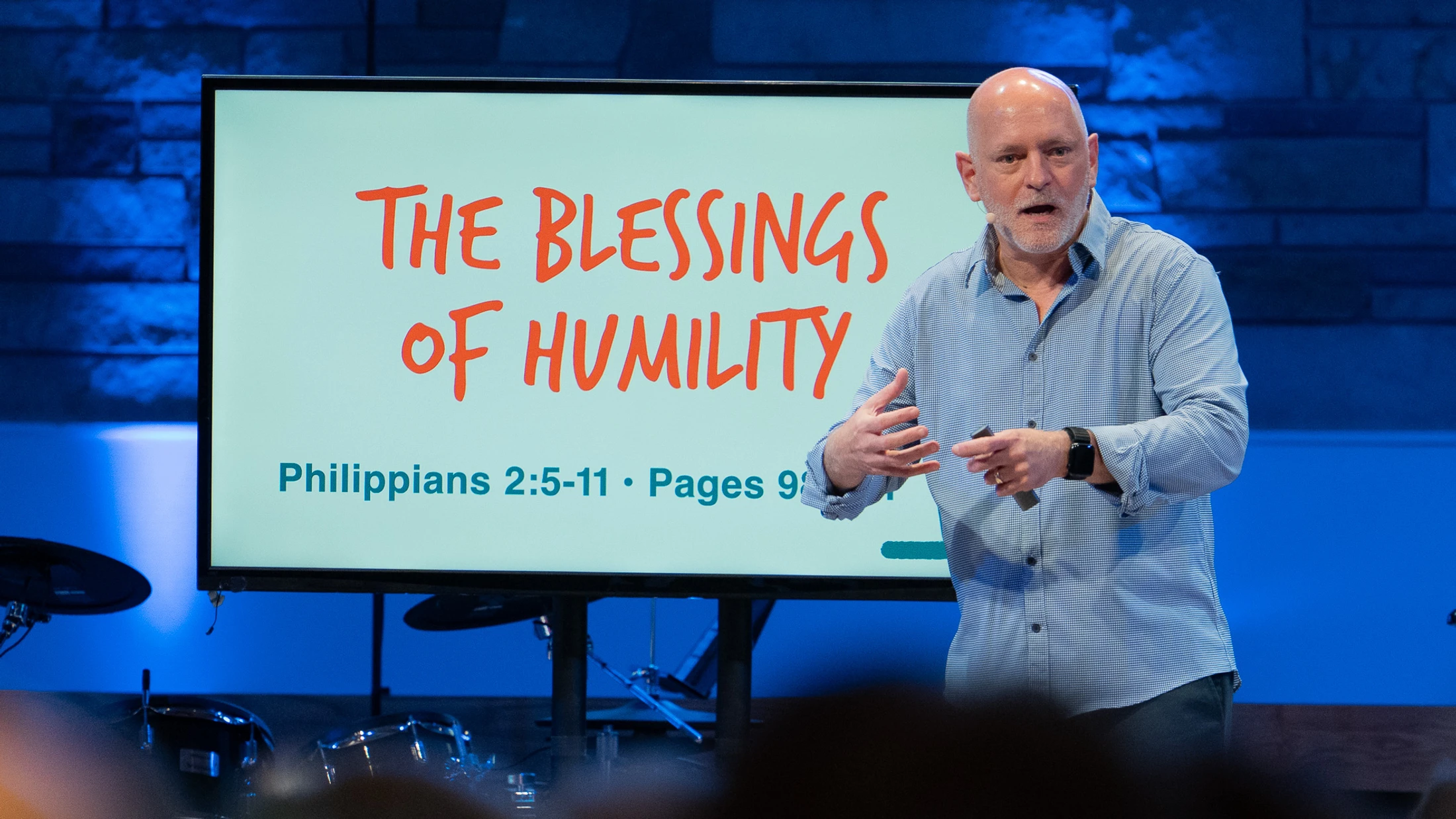
Joy Half Full - Week 7 (Philippians 2:5-11)
This message explores one of the most powerful and foundational passages in the New Testament—Philippians 2:5–11. It's all about the humility of Jesus: how He gave up everything to serve and save us, and how that humility is the mindset we're called to have too. When life is hard and our instinct is to turn inward, God invites us to look upward—to take on Jesus’ perspective and trust that His path of selflessness leads to real joy, purpose, and even exaltation. This message will challenge how you see yourself, others, and the God who gave everything for you.
[00:00:00] Well, we've been in the study of Philippians and it's such an incredible book. I, I'm enjoying just diving into it personally. And, um, and it, and it teaches us to live life from a different perspective. A perspective of, of seeing things from God's perspective even in the difficult times. And this morning we're gonna be looking at one of great passages, uh, in the book of Philippians that people, you know, study and love it.
It's, it's talking about Jesus. Not only what he did, but then how it's an example to us. We're gonna be looking at Philippians two verses five through 11, and if you have a Bible i'd, I'd encourage you to open it up to leave it open. If you don't have one, there's one in front of you and I'd encourage you to use that because we're gonna constantly be referring back to these verses throughout our time this morning.
And I want you to be able to, to see where this all comes from. But let me begin by reading these verses. We're gonna look at Philippians two starting in verse five. Paul says, have this mind amongst yourself, which is yours in Christ Jesus, who though he was in the form of God, did not consider [00:01:00] equality with that God a thing to be grasped, but emptied himself by taking the form of a servant, being born in the whiteness of men and being found in human form.
He humbled himself by becoming obedient to the point of death, even death on the cross. And therefore, God has exalted him and bestowed upon him the name that is above every name, so that at the name of Jesus, every niche bow in heaven and on earth and under the earth and every tongue confess that Jesus Christ is Lord to the glory of God the Father.
May God bless the reading of his word. Let me pray. Father, I thank you for the privilege that we do have this morning to come and to be able to dive into this incredible passage, this incredible teaching about, about your love for us, about what Jesus has done. And Father, I pray that you would bless this time.
I, I thank you for what you continue to teach me and Father, how you challenge me in my own study of these passages. And Father, I pray now that you'd get me out of the way and that you just let me be a vehicle through which you communicate your timeless truth of your word. [00:02:00] Uh, that I'd get lost. And Father, that, that you would speak to each one of us through your spirit.
Father, help us to hear, understand, and, and respond to whatever you would have for each of us this morning. We pray in Jesus' name. Amen. You know, about a month ago I was listening to a, uh, a podcast. It was kind of like a Christian, um, news magazine. And they were, were talking about, they were interviewing somebody.
It, it had this program that was helping vets deal with PST, uh, PSTD after coming back from serving in a war zone. And, and this group specifically had these groups or these vets that they were getting together with the idea of, of building motorcycles that they would then give to other needy people who needed transportation.
And in the interview they talked about how there was value in, in, in the task of working on the motorcycles, of getting them to focus on the mechanics and, and how it was helping these vets deal with their ongoing issues. Now, that reminded me of several other articles that I had listened to or read in the few months [00:03:00] before.
One was talking about in a similar way, it was a group that was trying to get together veterans helping them deal with their PSDD, and, and they were doing so by getting these veterans to form community gardens. And this article talked about how they would teach them the gardening skills and, and, and, and they would grow food to help provide healthy food for needy people in the community.
And the article talked about the value of, of working in nature and the rhythm of, of working with the ground and how that was helpful in their healing. And then, then there was another one, uh, where, where they were talking about another group that was trying to minister to veterans dealing with recovery.
But this one was focused on getting them to work with horses. And so they would work with these horses and train the horses and then bring in special needs kids and to be able to, uh, to help these special needs kids, you know, deal with therapy on horses. And, and, and they talked about how, you know, this process of working with these large animals were healing and helpful.
And, and as I listened to the, not only [00:04:00] the one, but then all these things, it, it made me think, you know, here I ran across these three different profiles and they were all dealing with groups seeking to accomplish the same goal. They're all trying to help veterans deal with the trauma from the battlefield.
And, and all three were pointing to the inherent value of the things that they were doing. But when I thought about it, I realized what they were doing. There's not much of an overlap. I mean, building motorcycles is vastly different than building a community garden, which is vastly different than working with horses.
And, and so it really struck me, how could all these programs be effective? When their activities seemed to be so incredibly diverse and, and I think the answer came out in the comment of the leader of the motorcycle group and when he was being interviewed and someone asked him about some other groups that were trying to do the same thing through diverse methodology.
And what he said in response was that the real key to their effectiveness of all these groups is that they all [00:05:00] tried to get hurting veterans to focus on something beyond themselves. You know, that's what tied all the groups together. The activities were vastly different again, working with motorcycles or gardening or horses, but, but what really tied them together is that you had men and women that were hurting and instead of saying, let's focus on your hurt, your pain, well, let's focus on giving to other people.
Let's focus on ministering to other people serving their need. Well, lemme suggest, I think it's an idea that works because it's an idea that's actually taught in the Bible. It's actually a principle that's modeled through Jesus Christ. As we're gonna see in the passage we're looking at this morning, you see, this morning we're gonna be looking at this incredible passage from Philippians two that we read a few moments ago in the beginning of the chapter.
Paul begins by, by this call, to living in humility. We looked at that last week for those who were with us versus uh, three and four. Do nothing from selfish ambition or conceit, but in humility, count others more significant than yourselves. Let each of you look not [00:06:00] only to your own interests, but also to the interest of others.
And he's calling us to this other centered model of humility. It's exemplified through Jesus. And that's what we're gonna see. That, that it's Jesus who is the one who models this and, and this passage that we're gonna look at, yes, it teaches great theology about Jesus, about his incarnation, his sacrifice on the cross.
But one of the things that we want to see is that it's also teaching us to not only understand, but to respond. Uh, now before we get into it, let me take a moment and, and kind of back up and remind you of the context of the book that we're studying. Again, anytime that we wanna understand the, you know, what, what it's teaching, it's helpful to understand the context.
And in previous, for those that have been with us in previous lessons, what we've seen is that Paul is writing this book to a group of believers in Philippi who were discouraged, who were confused. They, they, they were, you know, troubled by all the various problems they faced that Paul was facing. And what he does is [00:07:00] he challenges them and he challenges us to see life from God's perspective in the midst of these hard and difficult times.
You know, our perspective can be everything. All I can see is the problems that are before me. And Paul says, no, I want you to, I want you to discover joy and peace. In the midst of difficulty. And that means not just being overwhelmed by your own perspective, but but seeing God's perspective. Actually, it's a theme we're gonna see runs to the very end of the book.
Why? Because God has a different perspective than we do. I mean, how often does something happen in life? We're surprised where overwhelmed. We feel it's bigger than us. We we're worried. Well, do you think that God's ever surprised by anything that happens? Is he ever overwhelmed? Is he ever worried? So his perspective is totally different than ours and why we don't see through his eyes as much as we we can.
He says, okay, I want you to step back and I want you to see as much as you can from God's perspective. And, and first of all, it's a [00:08:00] perspective that remembers God's sovereign promise. You know, we need to realize that God is sovereign over everything that happens. And not only is he sovereign, but, but in that sovereignty, he only allows that which he can use for good.
And so we can be confident not only of God's control, but then also of God's love, God's love for us individually and has promised to exercise that sovereign plan in each of our lives personally, for all of us who have a relationship with God through Jesus Christ. That's the promise of Philippians one, six that we keep coming back to because it's core to the whole thing.
He says, I am sure of this, that he who began a good work in you will bring it to completion at the day of Jesus Christ, he began the work. He loves you, that God has started this work and I can be sure that God will bring it to completion, that he has a sovereign plan in your life. That doesn't mean that everything will always be good or easy or pleasant, or that you will always understand what God is doing.
In fact, there will be many times we don't. Right, because we live in a world where there's brokenness and we live [00:09:00] in a world where there's evil and opposition, but we can know that God's good plan is always greater than whatever evil or brokenness we face, and therefore we can be confident that there's, there's some redeeming purpose.
And because we can be sure of that, as we saw Paul do in chapter one, we can look for it. We can say, God, what is your purpose? And, and, and we will always find at least part of what God's plan is. Now, if we hold onto that truth, it will give us confidence and it will give us hope and purpose, even joy in the midst of the most uncertain of times.
But that's one way that we're to see through the lens of God's perspective. But now as we come to chapter two, he gives us another lens in a sense, the perspective Jesus of the perspective of his humility. See if you have your Bibles open, look at verse five. That's what he says. He says, have this mind amongst yourself, which is yours in Christ Jesus.
And he's saying, okay. The key to finding joy and peace isn't just seeing life through the perspective of [00:10:00] God's sovereignty. It's also seeing life through the perspective of Jesus and his humility. Now, last Sunday we started to talk about what humility is, and it's hard because it's not a virtue that is ever celebrated in our culture.
When it spoken of, it's usually negatively. I think it's an idea that's often misunderstood. You know, humility is not having a poor self-image. It's not looking down at ourselves. Humility is actually thinking less about ourselves. It's thinking about other people, because pride is when we not have too high of a view of ourselves, it's when we think of ourselves too much.
It's being self-centered or self-centered. Humility is being other-centered. And what we're gonna see is that Jesus is presented as the ultimate example of this true humility. Now, the danger for all of us is this. When we go through difficult times, when we go through crisis or uncertainty, what can happen is that we become fixated on our own problems, our own questions, our own confusion.
We, we naturally [00:11:00] turn inward, but God calls us to do the hard work of looking beyond ourselves. Of saying, okay, I wanna look at Jesus' perspective that isn't all about me. And when I learn to look that way, I find a joy and a purpose that transcends circumstances. So let's look at this idea. What we're gonna see is that, is that this passage that we're looking at is an incredible passage on the theology of Jesus, of his incarnation.
This idea that Jesus who existed from eternity, passed as God. Came and took on human flesh came to earth to die on the cross. And, and while this teaches incredible theological truths about Jesus, it also challenges us not to know, just know these things, but to respond to, to live out the truth again.
Verse five, have this mind amongst yourself, which is yours in Christ Jesus. If we remember, we saw a moment ago verses three and four, do nothing from selfish ambition or conceit, but in humility, consider others [00:12:00] more significant than yourselves. That each of you look not only to your own interests, but also to the interests of others.
This is what it's calling us to. Now, here's what can happen is that when we read a passage like this, we can think, okay, well I want to be, I wanna be more other centered. I wanna be more humble. But the problem is, is that we can then define our idea of humility by other people. So I think that I'm being humble.
If I'm being more humble than the people around me, I'm, I'm being a little less self-centered than the people around me. And the challenge is, Hebrews 12 talks about that as we run the f race of faith, that we should fix our eyes on Jesus, who is the founder and perfecter of our faith. See, the question isn't, are we more self, you know, or, or more self selfless, more humble than the people around us.
It's, it's how do we live it out in relation to Christ? And so with that idea saying, if you really wanna understand what this looks like, he then takes us to Jesus and he calls us to look at it, not just theologically, but practically, [00:13:00] to say, okay, do you understand this and what it means to live out this example in our life now?
Now to look at it, we have to start by looking at the eternal nature of Jesus. That's where the passage starts. We have to first of all understand who Jesus was and what he willingly gave up. Verse six, if you look at it in your Bibles, it says, Jesus was in the form God. He did not consider equality with God, something to be grasped.
And it, and it describes the sta uh, the status of Jesus before creation, that he for eternity past existed. He would, he didn't, his life didn't begin at his human birth. He was eternally God. Now for some we're like, wait a second. This is hard to understand, you know? Well, I thought there's God and there's Jesus, and well, what I'm getting into is this idea that that is taught theologically, that an idea taught throughout the Bible, which what we refer to as the Trinity, that there is one God, and that God has three persons, God, the Father, God the Son God, the Holy Spirit, all of God.
But they're, but they're distinct persons. And, um, and it sounds [00:14:00] confusing. And, and, and it's because it is. And, and if you want me to explain it to you. I can't, you know, I, I, I, I can't understand it. It's beyond our ability to comprehend. Now, some people will respond, and the idea is that, well, because I can't understand it, because it doesn't make sense to me, you know, therefore, it can't be true.
Now I'm gonna acknowledge it doesn't make sense, and that can seem to be uncomfortable. But here's what I want you to realize. This is talking about the nature of God. Now, would it make sense for me to say, from order for me to really believe God, I've gotta totally understand him, he's gotta make perfect sense to me.
I've gotta comprehend him. No, because what I'm saying is for me to believe in God, he can't be any greater than me. And the reality is that God is far greater than us. Lemme try to illustrate this. Some of you have heard me use this illustration before, but, but let's say if we have a couple ants that are up here and somehow in their ant language, they're watching everything that's happening.
And they're communicating with each other, and they're saying, look at those people. I wonder what it's [00:15:00] like to be human now, how well do you think a couple ants can understand the essence of humanity? Not very well, right? There's such this gap between us and ants. They can't comprehend the humanity. They can't understand our feelings.
They can't understand what's going on. Now, here's what we need to realize, is that Ansa and us are both created beings. I, I argue there's, there, there's arguably a greater gap between us and God than there is against us and the ants. And if we look at it and we say, an ant can't understand the nature of what it is to be human, how can we sit there and look at ourselves and say, well, I have to understand the nature of what it means to be God.
Now the fact is, I can't. And, and you know what? That can be frustrating, but I tell you in my mind, the more that I've looked at that, the more I'm comfortable with it. I'm glad that God is beyond my ability to comprehend. I'm glad that it's not a, a little god that that's just like me, but a little better.
No, no. He is beyond our comprehension. So when [00:16:00] we get into this, yeah, there's gonna be parts of it that's, I don't understand it, but, but God calls us to believe it even though we can't comprehend it. So what does it say in verse six that he was informed God, not that he was in physical form, but the word there means he was in essence.
That he had the qualities that made something What it is, it's what it's saying. It's that Jesus for eternity past existed as God. It's taught throughout the Bible. So for example, in John one, in the beginning was the word speaking of Jesus, and the word was with God, and the word was God. He was in the beginning with God.
All things were made through him. And without him was not anything made that was made. So when we talk about God and creator, that was Jesus doing the work of creation. And we've gotta realize that Paul is starting here with the deed of Jesus. Because we cannot understand the extent in which Jesus humbled himself unless we fully understand where he started, what he willingly gave up.
Again, think about this even in our own terms at certain times, you know, we, why do we struggle with people? [00:17:00] 'cause I feel like, man, and they dissed me. They treated me. I deserve to be treated better. I deserve, I didn't deserve that. And what we're saying is since I, I have a certain status that deserves something, and here's what we need to realize.
Even if you argued, that's true, which I, I'm not sure it is. We don't have a higher status than anybody else here. Jesus did. He was eternal God. He was a creator. He, he did deserve better. He deserved to be worshiped and obeyed, but yet he willingly gave it up for our benefit. And it's only as we start to understand and reflect upon his divinity, can we properly understand the scope of his humanity.
Humility. Yeah. And so what we see now is that Paul takes us through these progressive steps that he started his eternal God, and then, and then we see how he continues to now give up to, to empty himself. First of all, he willingly let go of the prerogatives of his deity. Verse six, though he was informed God, he did not [00:18:00] consider equality with thing, got a thing to be grasped.
When it says he didn't consider something to be grasped, it means he didn't consider it something to be held onto. He had it, but he didn't need to hold onto it. He willingly let it go. Now it's not saying that when Jesus took on human flesh that he see being, see cease being God. Rather, what he did is he set aside some of his rights and prerogatives the use of his divine attributes.
He still had them, but he didn't use them. And so wise on God, on earth, he still, God. He declared himself to be God. He, he forgave sins, which only God could do. But in taking on humility, he laid aside certain exercises of traits of divinity. That were inconsistent with human experience. So think about this.
God does not change. He does not grow. Yet Jesus set that aside so that he could grow, so that he could become as come as a baby who would grow into a boy and grow into His a man. He changed. He God is all knowing, [00:19:00] but Jesus set aside the exercise of that so that as a baby, he had to learn to speak and he had to learn to read like we do.
That Jesus lived a fully human life while still being God. He still had the right of being worshiped of God, but laid aside that right and choose living to live, choosing to live humbly with us. And what does that mean? You know, it's a challenge, I think, to all of us, uh, because when we think of ourselves again, we, we, it's natural for us to think about what I deserve.
You know, here's, and we don't wanna let go of what we deserve. We wanna defend it. Man, I deserve to live happiness. I deserve to pursue it. And, and, and, and, and so what we do is we, we think of the use of our time and of our, of our resources to maximize, maximize our own personal comfort. You know, in marriage it's often talked about, well, the quality of our marriage is determined by how well my spouse is meeting my needs.
Are they making me feel personally fulfilled? It. You know, I took the initiative last. It's their turn to [00:20:00] make I deserve to be happy. I deserve to be treated better. Or even in churches, so often people that find their relationship with the church, you know, are they meeting my needs? People talk to me or do I like what's happening?
And we're not asking, okay, is it giving me an opportunity to serve? See, that's human nature. That's the natural mindset of the world to think about myself. But God calls us to have the mind amongst yourself, which is yours in Christ Jesus. Who willingly let go of the prerogatives of his deity will never have to let that much go.
But you know, we're called to follow his path. So Jesus, who was eternally God let go of that to pursue the goal of redeeming humanity. His second step was then the creator took on the limits of creation again. It says that he emptied himself, taking the form of a servant being born in the likeness of men, God who was a creator of the universe, who existed in eternity past.
Being worshiped by the angels came down to this tiny planet [00:21:00] to enter human history. The creator entered creation, the timeless, eternal God entered space and time with all the limitations. All powerful. God became a baby who had to cry to be fed and needed diapers changed. He was seated on a throne in heaven, and now he's born in a barn.
He was surrounded by the angels who would worship him and serve it, serve him, and now he comes and he's rejected and mocked by the people whom he created. He took on the limits of creation, but not only that, God, almighty, mighty became a lowly servant again. Verse seven, he emptied himself, taking the form of a servant, being born in the likeness of met.
Did Jesus come to be served? No. I mean, the one who deserved it. The one who deserved to be worshiped and served. He came not to receive what he deserved. No, he came to serve. That's what Matthew 20 says. Even a son of man came not to be served, but to serve and to give his life as a ransom for [00:22:00] many. He gave him himself to meet our greatest need.
And then again, these things challenge us. And think about the person who you have the hardest time with, the person that you don't wanna see, and hey, when's the last time you did something to serve them? Have you been their servant? That's the example of Jesus. That's what he's calling us to. The next step of humility is the one who controls the universe became obedient, verse eight, and being found in human form.
He humbled himself by became obedient to the point of death, even death on a cross. He didn't become obedient to death. He became obedient to the point of death. He obeyed the father. Because in the father, they came together and they said, okay, this is the plan of salvation. And it, and he submitted to that plan where he came to die for our sins.
He came and taking death, taking the punishment for our sins that we deserved. And why did he do that? Because it was the only way for us to be saved, right? Because we had sins that needed to be covered. And, and, and the only way that he could die in the place of sinners was, [00:23:00] was for him to be sinless. A sinner would deserve it.
And, and it would only be one that was sinless who could take the place of a sinner and that therefore he had to be God. But yet to be, to be someone who died in the place of man, he had to be a man. 'cause only a man could die on behalf of men. So only Jesus could do this. This is why he did this. He became obedient, ultimately, death on a cross.
It's not only that he died, he humbled himself, become obedient to the point of death, even death on the cross. He not only experienced the lowest state, the lowest state of humanity of death, but when it talks about death on the cross, we, we underplay what that means. But first of all, just the physical element of death.
It was devised as the ultimate form of, of humiliation and torture, and it was done publicly in such a way that it was so terrible to try to scare people away from committing crime. It was so bad. It was to, to say the word cross in Roman society was a curse word. [00:24:00] It was, you would never say that because it was in a profanity, and yet somehow Jesus took this great issue of torture and he made it something that we take pride in as a follower of Jesus.
But it's not just the physical suffering that he did on the cross. When we look at the Bible, we realize there was a greater spiritual agony that he went through. Why? Because when he died on the cross, he not only took the physical, you know, uh, pain, but he then at the same time took the full weight of God's punishment.
Not for one sin, but for all the sin of all humanity. And, and, and so he goes through this and we see that it was so terrible that the only time he cried out in the cross, the only record we have isn't with the, isn't, with the, uh, the whipping. It isn't with the nails. It's when he cried out, my God, my God, why have you forsaken me?
When he took the wrath of God, and it was something that was so horrific that the human body literally could not handle it. The Bible teaches that the way that Jesus died was literally, he had an exploded heart. [00:25:00] That's John 19. In John 19, it tells us one of the soldiers pierced aside with a spear and it once there came out blood and water.
And we now know from medicine that the re, that this only happens because the heart exploded within his chest. He experienced a degree of agony and torture that goes beyond what any person will ever know, can't ever know. And that's what Jesus chose now. Incredible. What we see is we have this incredible description of his steps of humility.
But here's what I want you to see. It also tells us that his humility led to exaltation. Now, even in this, one of the things that we can look at is people say, well, he's called humility. If I, if I humble myself, if I really empty myself, if I, if I don't think about myself, you know, then, then I'm gonna be taken advantage of.
You know, can I really trust God? Yeah. Or can I trust people? I'm gonna be a doormat and people are gonna walk on and, and again, here's where God calls us to look to the example of Jesus. He humbled himself and he, and he trusted the [00:26:00] father to honor him. Look at, again, look at your Bibles verses nine through 11.
Therefore, God has highly exalted him and bestowed upon him the name that is above every name, so that at the name of Jesus, every niche shall bow in heaven and on earth and under the earth, and every tongue confessed that Jesus Christ is ord to the glory of God the father. And it's calling us that, that this idea that every knee shall bow to Jesus Christ.
What an incredible statement. At the final judgment, every knee will bow, every tongue confess. That means the hardest of atheists. That means you know, the greatest of criminals. That means an Adolf Hitler or Joseph Stalin or Richard Dawkins, uh, Charles Darwin. Everyone, people that are hostile to everything the Bible teaches.
Every person will ultimately bend his or her need of Jesus Christ will raise their voice and confess that Jesus Christ is God. You see, the question is not will you bend your knee to Jesus Christ and confess that he's God. The [00:27:00] question is, will you do it today? Will you do it today for salvation or will you do it on the other side, side of the grave in which it will be for condemnation?
Will you do it today as a friend of Jesus coming to him as your savior, or will you do it then in the future as a foe of Jesus, as you stand before him, as your judge? Will you do it today in joy or will you do it then in shame? Every knee will bow. You see the difference between those who bow in fear and facing judgment.
And those who bow in love facing God's reward is a question of when do we bow before our death, while we are still living? And some people will say, well, but I'll do that. And after, you know, I can do, well, no, the Hebrews nine talks about, no, it's pointed under, man wants to die. And then face judgment. It's, it's, if we do not do this during our life, we will ultimately bend our knee, but it will be in judgment.
And so the question is, have you done that? Do you have that relationship with God? God invites you to that [00:28:00] relationship and see if you're here today, he is king. He is Lord, he is. And he invites you to come to him and say, I accept the gift of grace and bow as a savior. And if not, then one day we all those who reject him will bow ultimately as a judge now.
So it calls us to follow the example of Jesus. That when we look at this and it says at every niche, bow to Jesus. But here's the question that I want to ask. This is something that as I studied this passage, it, it's like I saw things new that it just challenged me. Does the path of humility lead to our exaltation?
If you ever your Bibles open, look again at this passage in verse five. Paul introduces this whole section by calling us to have this mind amongst yourself, which is yours in Christ Jesus. And then he gives us this incredible picture of Jesus' humility and who though he was informed God did not consider quality of God something, be grasp, but emptied himself and describes those [00:29:00] steps of humility.
But here's the question. When Paul begins this section by calling us to have the same attitude that was in Christ Jesus, is he calling us only to follow his example up through verse eight and his humiliation and and emptying himself? Are we also called to follow the example of Jesus and how God exalted him in verses nine through 11?
Now at first you might think, well, that seems kind of clear. And because God exalted him to the name that is above every name. That every name, that doesn't happen to us. And and, okay, but let's look at the whole passage again. Again verses five through eight. Call us to follow Jesus example, but we can't go to the extremes.
I mean, let me even put a picture out here just to help you think about it. If you think about it, where did he start? He in very nature, God, none of us start no more. None of us start close to that. He became a human flesh. Well, that's, that's kind of us. And, and he to death and, but then ultimately death on a cross.
And [00:30:00] none of us will ever be asked or could, if even where we're asked to, to go this low. So when we think about this, then we say, when he calls us to then follow Jesus, have the same mindset as us. It was in Jesus Christ. He's calling us to follow him in principle, to follow him in a sense in the trajectory.
The, the fact is, is that I start in human flesh and I can just humble myself. In fact, the problem with this illustration is it's probably like a thousand times, you know, this should be a thousand times smaller. 'cause you know, it's God's elevation above us is so much greater and it's death on the cross is so much worse.
And, but if I just had a little.here and said, well, it's a line you can't see it. But that wouldn't make a good illustration. So I had to make it a little bigger so you could see it. But the whole idea is that we're called to follow Jesus trajectory. Now when we look at this principle then, and we look at verses nine through 11, yes, we will.
What it's saying is that, that Jesus emptied himself and then God highly exalted him and, and we will never [00:31:00] go to that extreme where Jesus will, God will exalt us to the name that is above every name. But that's not the issue you see, just like we will never started this high, never go this low. Is he calling us to follow the trajectory?
To believe that God promises that if we empty ourselves, if we commit to being God's representatives and serving other people, being other centered, that he will take care of us, that he will exalt us in the same way, not to the level of Jesus, but that he will exalt us far higher than we could have ever exalted ourselves.
So the question, who's gonna take better care of you? Who's gonna better get better? Take care of your honor, of, of your joy, of, of your possessions. See if we feel the need to protect ourselves and, and make it ourselves. And I can't trust if, if, if nobody takes care of me and if I don't take care of me, nobody's gonna take care of me.
And so we become self-centered. And, and so we look at that and we we're trying to protect ourselves and God says, no, I want you to trust me. [00:32:00] That, that if, if, if you turn yourself, I'm not gonna make your life miserable, and I'm not gonna let people, you know, there might be times that it seems like people are walking over you, but in time God will exalt you.
He will take care of you. He will lift you up. He will allow you to accomplish a peace, a joy, even a name and reputation that is far greater than you could have ever achieved on your own. Now when you understand this, it's tell teaching us about what Jesus did. But here's where I wanna come back and kind of wrap up on is that it's not just understanding these things, but the call is from what we said in the beginning, practical it.
It's practic practical theology. It's not just about Jesus and his selfless love, and so we can understand and be amazed at what he did, but the whole passage is saying from the beginning, not only believe the right things about Jesus, but reflect on what he has done with you and, and have the same attitude, the same mindset in your relationships with other people.
Now, let me even [00:33:00] point out something that might seem to be a really minor point, but I think is really significant. He doesn't call us to have the same actions as Jesus. But the same mindset of Jesus and at at, at first, we might think, well, no, he's calling us to do and, and you know, we need to do humble things and we need to, no, that's not what it's saying.
He's calling us to mindset and attitude of humility, right? Because it's possible for me to try to change my behavior and to act in a humble way and do humble things and not really be humble in my mind and my attitude. And, and, but on the other hand, if I'm humble in my attitude, I will always act in a humble way.
Um, so it's not just do we do humble things? Do we have the mindset? Lemme give you an example of this. Some of you might be related to this. Let's think about marriage. How many of you have ever say, okay, I've done something really selfish or selfless, humbly serving my spouse and I, and I've done that and I can feel pretty good about [00:34:00] myself and I, I can start to think.
Oh, I'm a pretty good husband. You know, Sandy's really blessed to have a husband like me and look what I've done. I mean, it just, and, and maybe I can even do a series of, of selfless actions over several weeks. And, but then what happens if she doesn't properly acknowledge selflessness and, and doesn't give back to me in the way that I think is appropriate?
And next thing you know, I start to think, Hey, wait, you know, I, I've shown some serious love here and now it's your turn to love back. In the game of love, I've hit the ball at your court. I've hit multiple balls. Your court time for you to start return my, I'm outta balls here. And, and uh, and so what happens is I start to get frustrated.
I start to get angry. I start to resent her. Anybody else? Don't leave me hanging. I'm not by myself. Okay? Somebody, yeah, some of we've done that, okay? We understand that now. Now, why do I respond that way? My actions were humble. My actions might have been even selfless, might have been [00:35:00] Christ-like, but did I have a Christ-like attitude?
No, because my response shows that I wasn't really emptying myself and giving of myself to minister to her. I was trying to make an investment and saying, well, if I give some here, then I expect something back. You see, I was acting in a humble way, but as a means to try to get her to serve me. See, God calls us to not just the actions, but the attitude.
And here's what I've gotta gotta, you know, we've gotta admit if any of us who are married would recognize that we can relate to that illustration. If we struggle with that Christ-like self-sacrificial humility in our marriage relationships, should we be surprised that we struggle in it and our other relationships as well.
Even in the church, you know, well, we do some selfless active service and, and we feel good about ourselves and I've done this and, but what happens when the other person doesn't appreciate me in the right way, when they even respond negatively [00:36:00] to my, you know, my self-centered or self selfless giving and, and I've done ministry and, and, and you're resenting, you're responding negatively and well, suddenly I get upset.
But because I expect something in return or we come to church and, and we serve in some way. And I came and I, I served in the coffee bar. I served in, you know, well, I've served in Sunday school. Well, now I come back and now it's about me. I did my giving part and now I wanna receive back. People have gotta give me, well, nobody talked to me and now I'm upset about that.
And, and what we need to realize is that no, that's acting in a way of humility, but it's not a spirit of self-sacrifice and humility. Our attitude is such that when we come to church that we pour ourselves out and we say, God, I wanna have the attitude of Jesus. He deserved everything. He was God eternal, but yet he emptied himself and, and I'll never have to give up that much and I'll never go that low.
But in practice, can I follow the trajectory of Jesus? Can I really be someone who empties [00:37:00] myself and has a spirit of joy? And it's not about getting something back. But sometimes we come back and we say, but, but if I do that, is there a time to be selfish? Is there ever a time that it, because if I don't look to my own interests, then why don't I just get beaten down?
One, it be taken advantage of and, and here again, we've gotta go back and end with verses nine through 11, is God calling us to follow the example of Jesus only in emptying ourselves, but we're also in the example of trusting in God. That if I emp empty myself in humility, that God will reward me. We need to follow Jesus' example in his trust and the care and the reward of the Father, right?
Because he trusted that if he emptied himself, God would exalt him. And he calls us to have the same faith and trust in God. And again, one of the reasons that we struggle is that we think if I do this well, who's gonna take care of me? And ultimately, it's not a lack of faith in other people. It's a lack of faith in in God.[00:38:00]
God, if I, I really think I empty myself. You know, I, I've, I've gotta protect myself, and God is saying, no. Who's going to take a better, do a better job of, of giving you purpose, of meaning, of joy, of taking care of your needs? In the short run, it may feel like we're taking, being taken advantage of, but in the long run, I think this idea that it's teaching us that if we empty ourselves, commit to serving others, God will commit himself to taking care of us.
See, the question is you trust him. That's even Hebrews 11, six. Without faith, it is impossible to please him. For whoever would draw near to God must believe that he exists and that he rewards those who seek him. We need to have faith. What do we need to have faith? Number one, there is a God that he is powerful.
He's above us. And number two, that he rewards those who earnestly seek him, that he rewards that if we follow him, if we follow his path, that he will take care of us, that he will bless us. Who do you trust more to take care of you? [00:39:00] You are? Are you defending your own agenda, your own purposes, or are you willing to say, God, help me to learn what it means to not only be amazed at how God has loved me through Jesus Christ, who being and nature God gave it all up and, and, and emptied himself.
Father, help me to see that, but help me to follow that path and to trust that you will take care of me. My friends, again, let me just wrap up with this. Remember, it's not action, it's attitude. See if it's action, I can try to do things. See, I can change my action. I can't change my heart. And so ultimately, where's this take us back to?
It's the gospel. And the gospel is all about me coming and saying, God, I need you to change me. It's not performance. It's not, how do I do better? God, I need you to change me. Give me the attitude. Help me be overwhelmed. By the humility and the love of Jesus Christ, help me to help me to see that picture and just be transfixed by it.
And, and not only to believe it here, [00:40:00] but Father to embrace it so that, so that you give me the same mindset that was in Jesus Christ, who not only empties myself but then believes God, if I do, you're gonna take care of me. You're gonna bless me. Do you believe that? You see, I believe if we do that God will not only change the culture of our church.
And not only help us to suddenly start reaching people because we're so radically different than the rest of the culture, but if I really believe everything is promising here, that this is part of the joy, the blessing, that when we're overwhelmed by hard things, it's not just remembering God's sovereignty, it's remembering the perspective of Jesus.
And when we give of ourselves, you see, suddenly Jesus gives to us in ways that go far beyond what we could have ever done on our own. Let's pursue that together.